The most trusted oracle in the ancient world told Croesus of Lydia that if he made war on Persia, he would destroy a great empire. He made war on Persia. He destroyed a great empire — his own.
It is the most famous ambiguous prophecy in Greek history, and it is usually told as a joke about wishful listening. The more interesting part is what happened after Croesus crossed the border: a war he lost not to a bigger army but to two things nobody could have asked an oracle about — a king who refused to stop fighting in winter, and a line of pack camels.
Who was Croesus, and why do we say "rich as Croesus"?
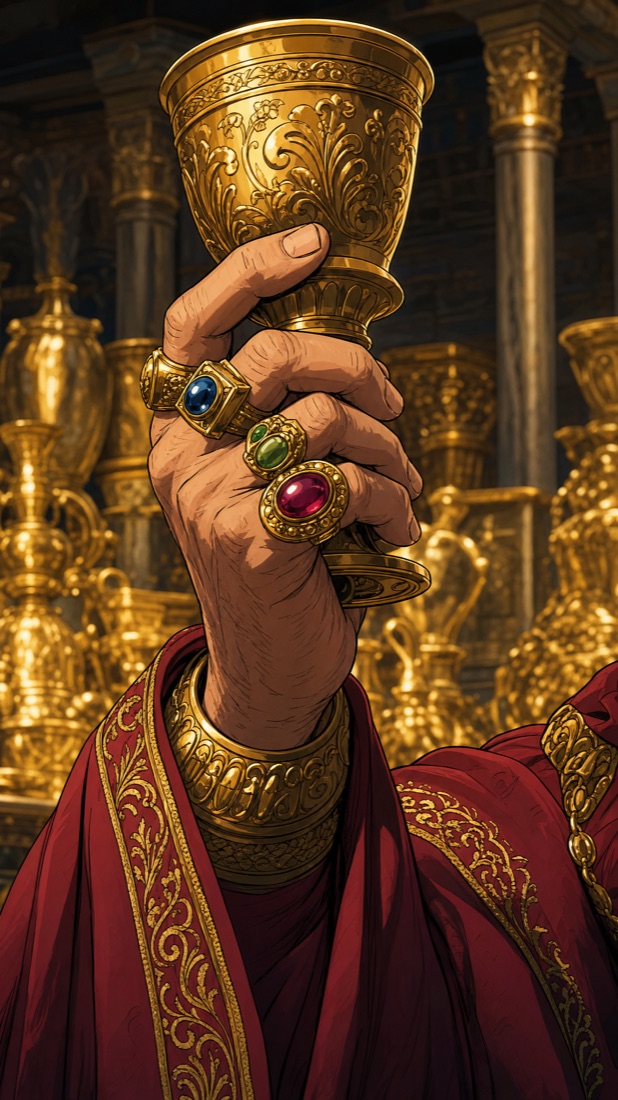
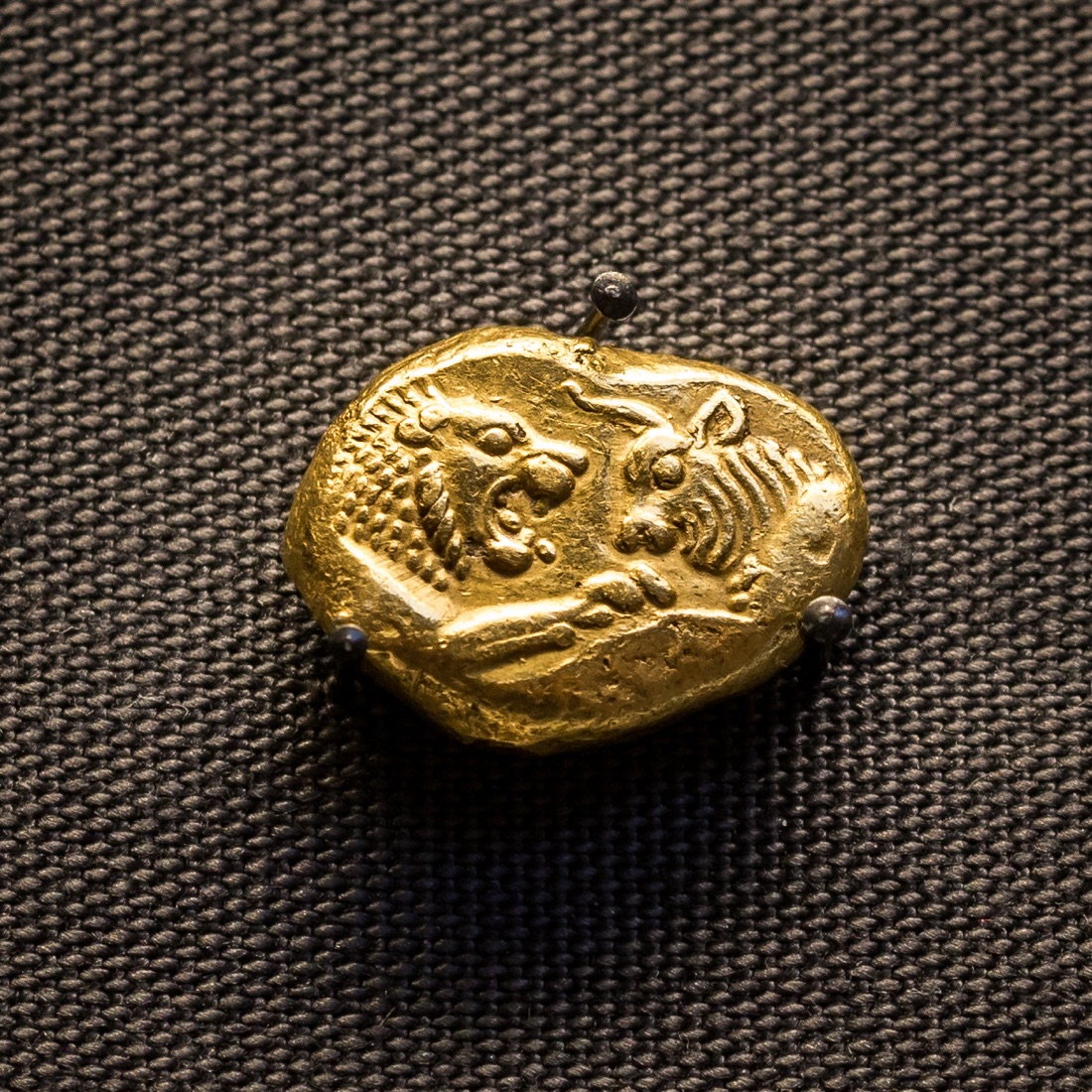
Croesus was the king of Lydia, in what is now western Turkey, and his wealth was literal rather than reputational. From about 560 BC he ruled from Sardis, near the Pactolus — a river that carried gold down out of the mountains. Lydia under Croesus struck some of the earliest coinage in pure gold and silver, and the Greeks who traded with him turned his name into a byword. It reached English intact: rich as Croesus.
Why did Croesus attack Persia?
Fear of a neighbour who had just doubled in size. In 550 BC a young Persian king named Cyrus had swallowed the Median empire whole — the story of how he did it is Part 1 — and Media had been Lydia's eastern counterweight. Overnight, Croesus had a rising power on his border instead of a rival to it.
So he decided to strike first, and did what a careful king of his era did before a war: he consulted the gods. Herodotus says he tested the major oracles to see which was reliable, judged Delphi the best of them, and sent it a fortune in gold before asking his real question.
What did the Oracle of Delphi tell Croesus?
That if he made war on the Persians, he would destroy a great empire. Croesus heard a promise of victory and began mustering allies — Sparta, Egypt, Babylon — for a spring campaign.
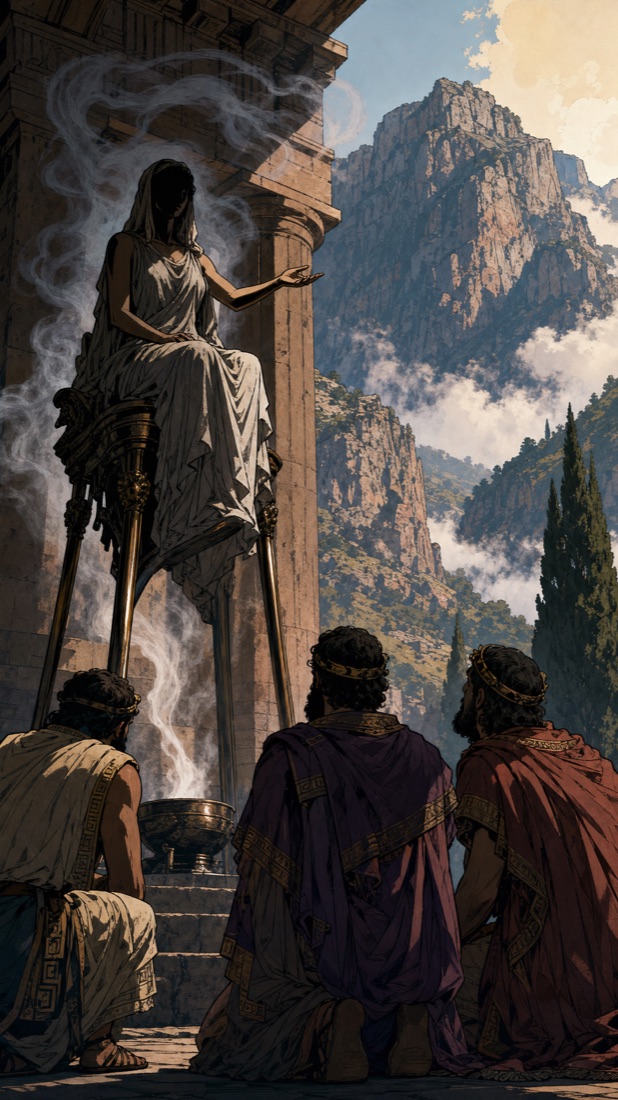
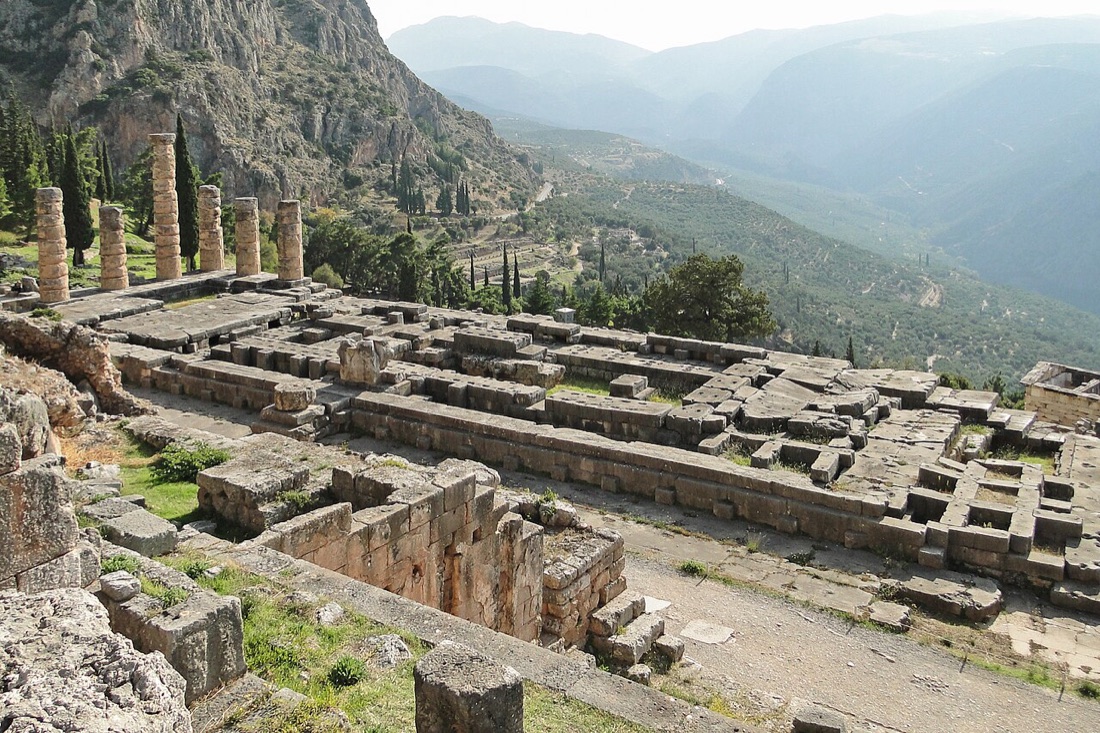
The answer was true whichever way the war went, and Croesus never asked the follow-up question. Herodotus reports that when he later sent to complain, Delphi's defence was exactly that: he should have asked which empire. Whether the priesthood was being cunning or merely careful is not recoverable — but a prophecy that cannot be wrong is also a prophecy that cannot help you.
Around 547 BC he crossed the Halys, the river marking his border, and invaded. The date is conventional rather than certain; it rests on a damaged line in a Babylonian chronicle, so "around 547" is as precise as the evidence allows.
The first battle, at Pteria, was a hard, indecisive draw that ended at nightfall. Croesus withdrew to Sardis and did the entirely normal thing: he disbanded his army for the winter and sent word for his allies to assemble in spring. Ancient armies did not campaign in the cold.
How did Cyrus defeat the best cavalry in the world?
By not waiting for spring, and then by using camels. Cyrus marched immediately, through the winter, so fast that, in Herodotus's phrase, he was his own messenger — arriving outside Sardis ahead of any word that he was coming, and long before a single ally could reach Croesus.
That left Croesus with the one force he had at hand, and it was formidable: the Lydian horsemen, whom Herodotus rates the finest cavalry in Asia. Cyrus's general Harpagus proposed a counter that had nothing to do with courage. He put the army's baggage camels at the front of the Persian line.
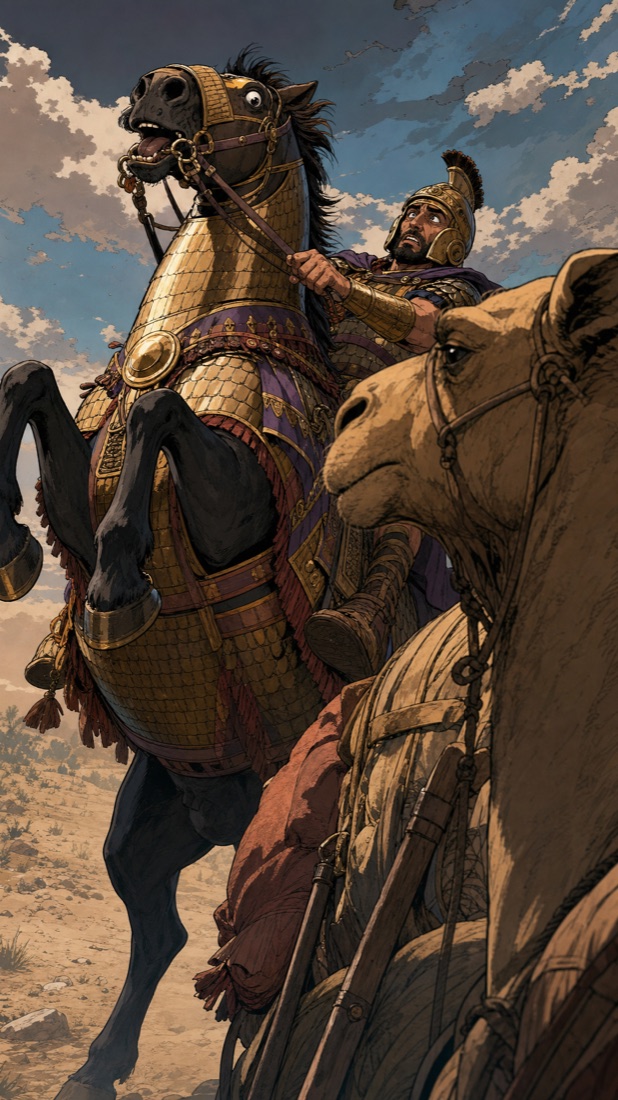
Horses that have never encountered camels will not stand the smell of them. The Lydian mounts panicked and bolted. Their riders dismounted and fought on foot — creditably, by Herodotus's account — and were driven back inside the city walls. The best cavalry in the world had been neutralised by the pack train.
How did the impregnable citadel of Sardis fall?
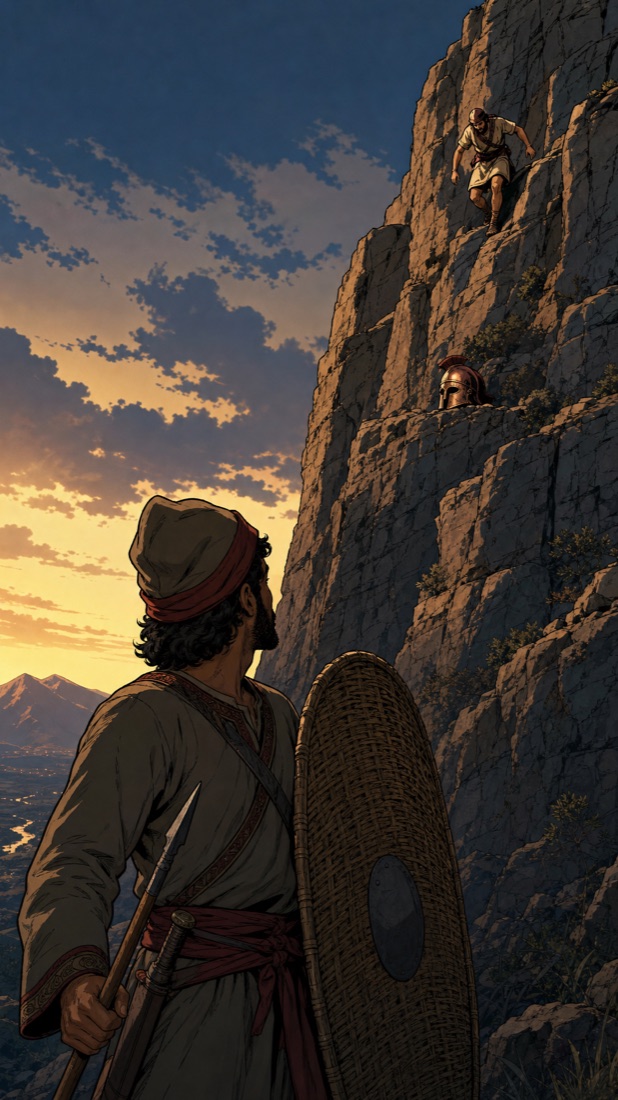
Because a Lydian soldier dropped his helmet. The citadel of Sardis sat on a cliff and was considered unassailable; the siege ran fourteen days with no progress.
Then a Persian named Hyroeades watched a Lydian climb down the cliff face to retrieve a fallen helmet, and climb back up. The route the defenders had judged too steep to need guarding was demonstrated, in front of the besieging army, to be climbable. Hyroeades led a party up it.
What happened to Croesus on the pyre?
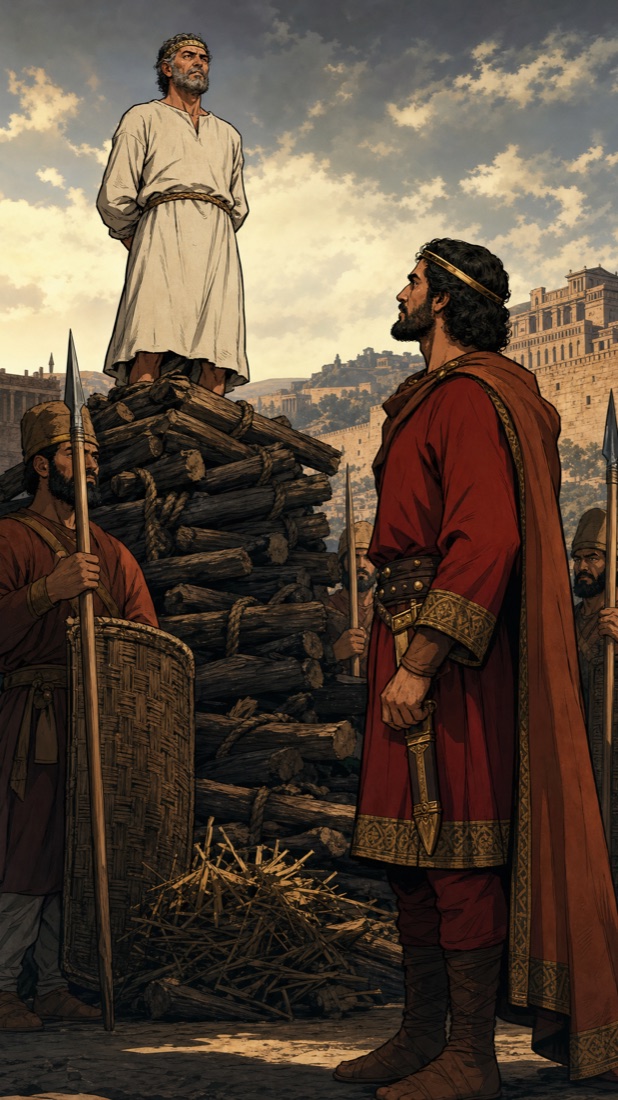
He was placed on it to burn, and — in Herodotus's telling — cried out a single name: Solon.
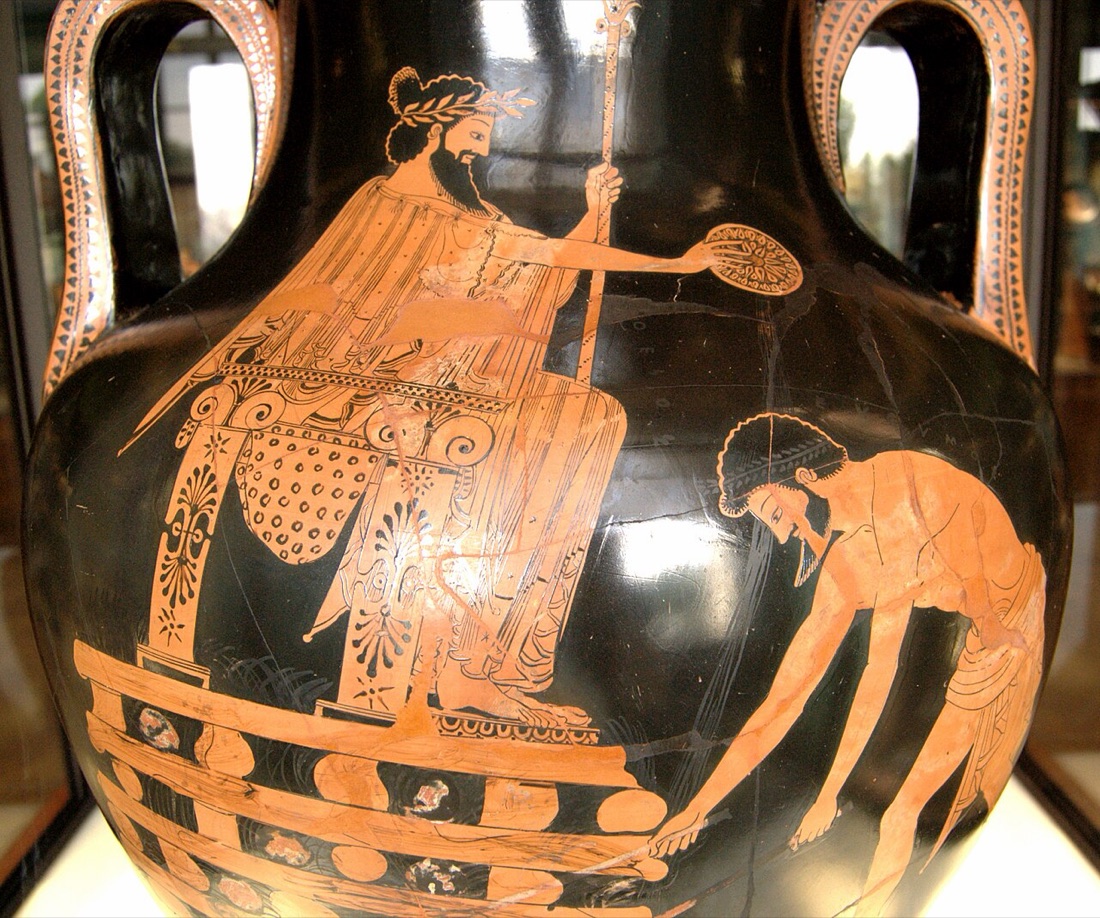
The vase above is worth looking at closely, because it does not quite show what Herodotus describes. Croesus sits crowned and composed, pouring a libation from a bowl while an attendant lights the wood — which is why many scholars read it, and the poet Bacchylides's version, as Croesus mounting the pyre himself rather than being condemned to it. The vase was painted around 500–490 BC — decades after the war, but decades before Herodotus wrote. His account is the fullest one we have; it is not the oldest, and it is not the only one.
What does "count no man happy until he is dead" mean?
It means fortune is not finished with you yet, and Croesus is the reason the line survives. Herodotus tells it as a set-piece: years earlier, the Athenian lawgiver Solon visited Sardis, and Croesus — after a tour of the treasury — asked him who was the happiest man he had ever met. He expected to be told it was himself.
Solon named ordinary men who had died well, and explained that no life can be judged until it is over, because fortune can take back everything it has given. Croesus dismissed him as a fool.
On the pyre he understood the remark, said the name aloud, and Cyrus asked what it meant. Hearing the answer — from a position of total victory, having just conquered the richest man alive — Cyrus ordered the fire quenched. It had caught too well, and, as the Greeks told it, Apollo sent a sudden rain to save his servant.
Modern historians doubt Solon and Croesus ever met; their dates sit awkwardly together. Herodotus is not really reporting a meeting. He is telling his readers what the war was about.
Cyrus spared Croesus and kept him at court as a counsellor — the same choice he had made with the grandfather who once ordered him killed. Twice now, the man building the largest empire on earth had found a defeated enemy more useful alive.
Why did the fall of Lydia matter?
Because it put Persia on the Aegean. With Lydia annexed, Cyrus's empire reached the coast, and the Ionian Greek cities along it acquired a Persian king. Every subsequent collision between Persia and Greece — Marathon, Thermopylae, and eventually Alexander marching the other way — begins at the border Croesus opened by crossing it.
Two empires were down. The third was the greatest city on earth: walls thought impossible to storm, a king who had not been home in ten years, and a priesthood that had already stopped defending him.
Sources
- The whole Lydian campaign — the oracle, Pteria, the camels, Sardis, the pyre and Solon — is Herodotus, Book I: Herodotus, The Histories, Book 1 (Perseus) (Solon at 1.29–33, the testing of the oracles and the answer at 1.46–53, the Halys and Pteria at 1.75–77, the winter pursuit at 1.79, the camels at 1.80, the fourteen-day siege and Hyroeades at 1.84, the pyre at 1.86–88, Croesus spared at 1.88–89, Delphi's defence of the wording at 1.91)
- Croesus, Lydian wealth and the reign dates: Croesus; Lydia
- The earliest gold and silver coinage struck under Croesus: Croeseid
- The contested date of the campaign, which rests on a damaged chronicle line: ABC 7, the Nabonidus Chronicle (Livius)
- The variant pyre tradition — Bacchylides and the Louvre amphora, in which Croesus appears to mount the pyre himself: Louvre G197, Croesus on the pyre; Bacchylides
- Lydia's annexation and what it meant for the Greek world: Achaemenid Empire; Pierre Briant, From Cyrus to Alexander: A History of the Persian Empire (2002), ch. 1; Matt Waters, King of the World: The Life of Cyrus the Great (Oxford, 2022), ch. 3–4

The illustrations above are reconstructions of scenes reported by Herodotus. All quotes, dates and figures are drawn from the sources listed.
The first chapter — the dream, the banquet and how Cyrus took Media — is Part 1: Why Iran Blocks the Road to Cyrus the Great's Tomb.