In the autumn of 539 BC the largest city in the world opened its gates to a foreign army and was not sacked. No siege engines, no breach, no burning. A Babylonian chronicle written on clay records the moment in a single flat clause: "without battle they entered Babylon."
Babylon had double walls behind a moat and a reputation, in both Greek accounts that survive, for being impossible to take by storm. None of that mattered, because the city had already been lost from the inside — and the men who lost it were its own priests.
What made Babylon so hard to take?
Its defences and its scale. Nebuchadnezzar II had given the city a double inner wall circuit with an outer rampart and a moat, and both Herodotus and Xenophon treat storming those walls as something no sensible army attempted. The city ran to well over a thousand hectares and held somewhere between one and two hundred thousand people.
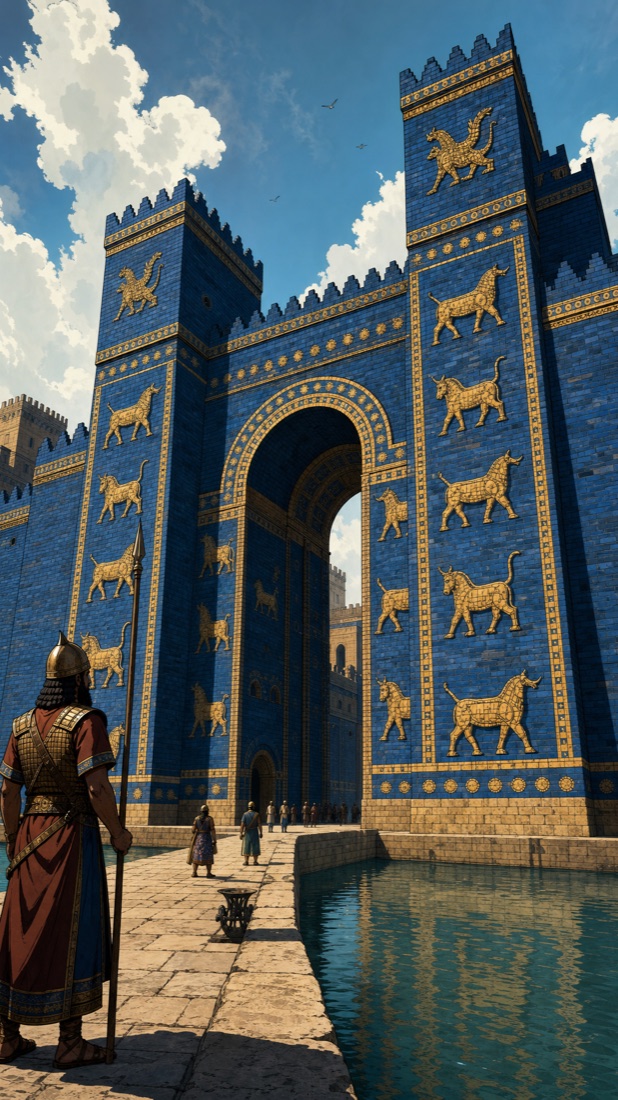
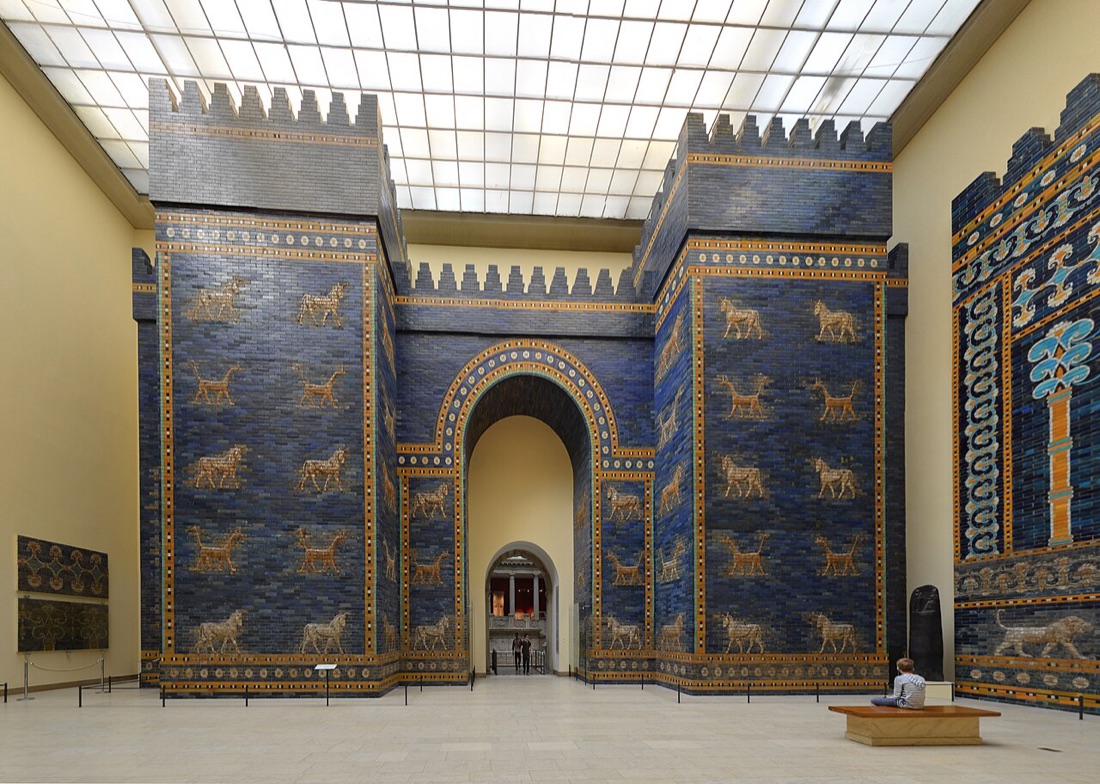
A note on the numbers: Herodotus gives Babylon's walls dimensions that archaeology has not supported, so the honest version is comparative rather than numerical. The walls were thought impossible to storm. That is a claim about reputation, and it is the claim that matters here — because nobody had to storm them.
Why did Babylon's own priests turn against their king?
Because Nabonidus was the wrong kind of king for Marduk's city, and he had been absent from it for about a decade. He came to the throne in 556 BC already elderly, and he was devoted to Sîn, the moon god of Harran — his mother had been a priestess in that cult. In a city whose entire religious establishment was built around Marduk, that was a standing insult.
Then he left. From roughly 553 BC he based himself at the Tayma oasis in Arabia, leaving his son Belshazzar as regent in Babylon.
His absence had a specific, unavoidable consequence. The Akitu New Year festival — the ceremony that renewed the king's mandate — required the king to take the hand of Marduk in Babylon. Without him it simply could not happen. The chronicle records the cancellation with the deadening repetition of an accounts ledger: the king did not come, Bel did not go out, the festival did not take place. Year after year.
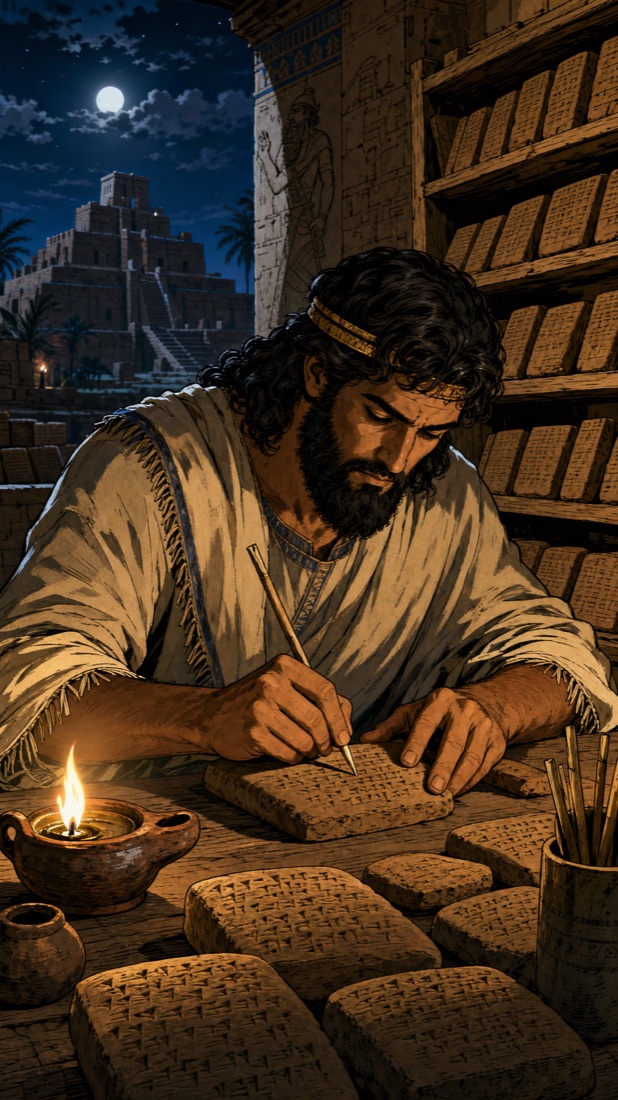
That grievance survives because the priesthood wrote it down. So does something blunter: a Babylonian document known as the Verse Account of Nabonidus is a sustained attack on Nabonidus that praises Cyrus. Babylon's religious establishment made its case against its own king in writing, and the writing outlasted both of them.
How did Cyrus actually take Babylon?
With one real battle, and then almost none. In the autumn of 539 BC Cyrus met the Babylonian army at Opis on the Tigris. The chronicle is unsentimental about it: the army of Akkad retreated, and "he carried off the plunder (and) slaughtered the people."
That line deserves care rather than celebration. It is partly broken, and scholars disagree about who did the slaughtering — Cyrus's forces, or Nabonidus punishing his own rebellious subjects. What is not in doubt is that the campaign opened with a massacre recorded on clay. The gentle version of this story is incomplete.
After Opis, the resistance simply stopped. Sippar fell without a battle. Two weeks after Opis, on the sixteenth day of the month, the chronicle records that Ugbaru, governor of Gutium, and the army of Cyrus "without battle they entered Babylon." Nabonidus, returning to the city, was captured.
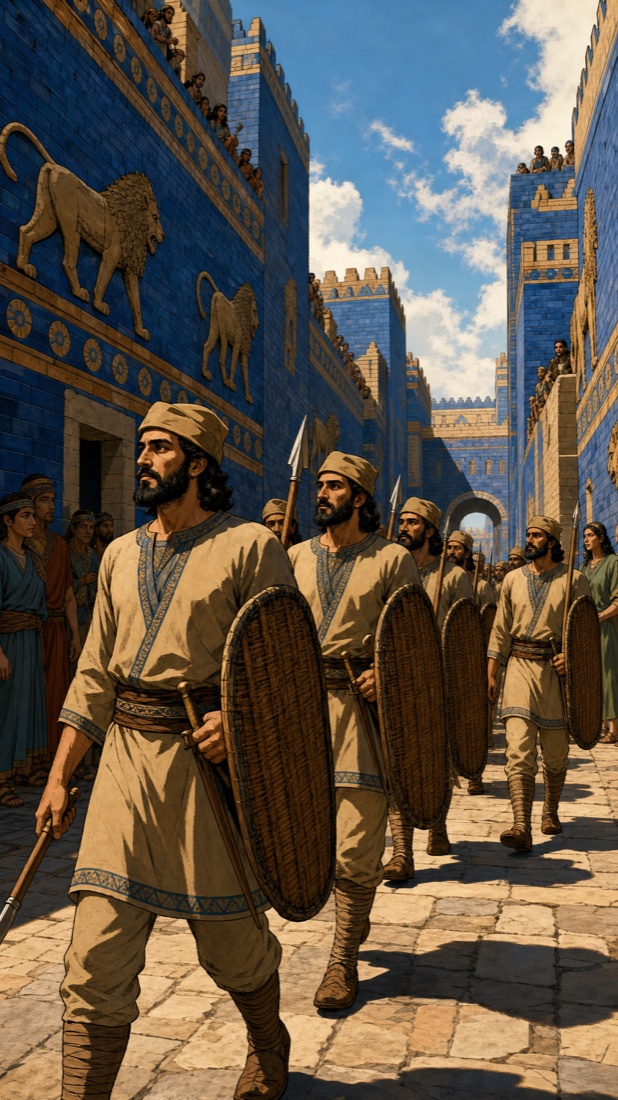
Cyrus himself did not enter for another seventeen days. What happened at that entry is the most famous image in the story, and it is also the least secure: the standard older translation has green twigs spread in front of him, an image of welcome that has been reproduced for a century. Newer editions read the disputed Akkadian word differently — as ritual vessels being filled before him. The welcome is well attested; the branches specifically are one reading of one damaged word.
What did the Greeks and the Book of Daniel say about that night?
They said Babylon fell during a party. Herodotus writes that the city was taken while its people were celebrating a festival, and Xenophon's account agrees on a festival night. The Book of Daniel gives the same night its most famous scene: Belshazzar's feast, the disembodied hand writing on the palace wall, the kingdom weighed and found wanting.
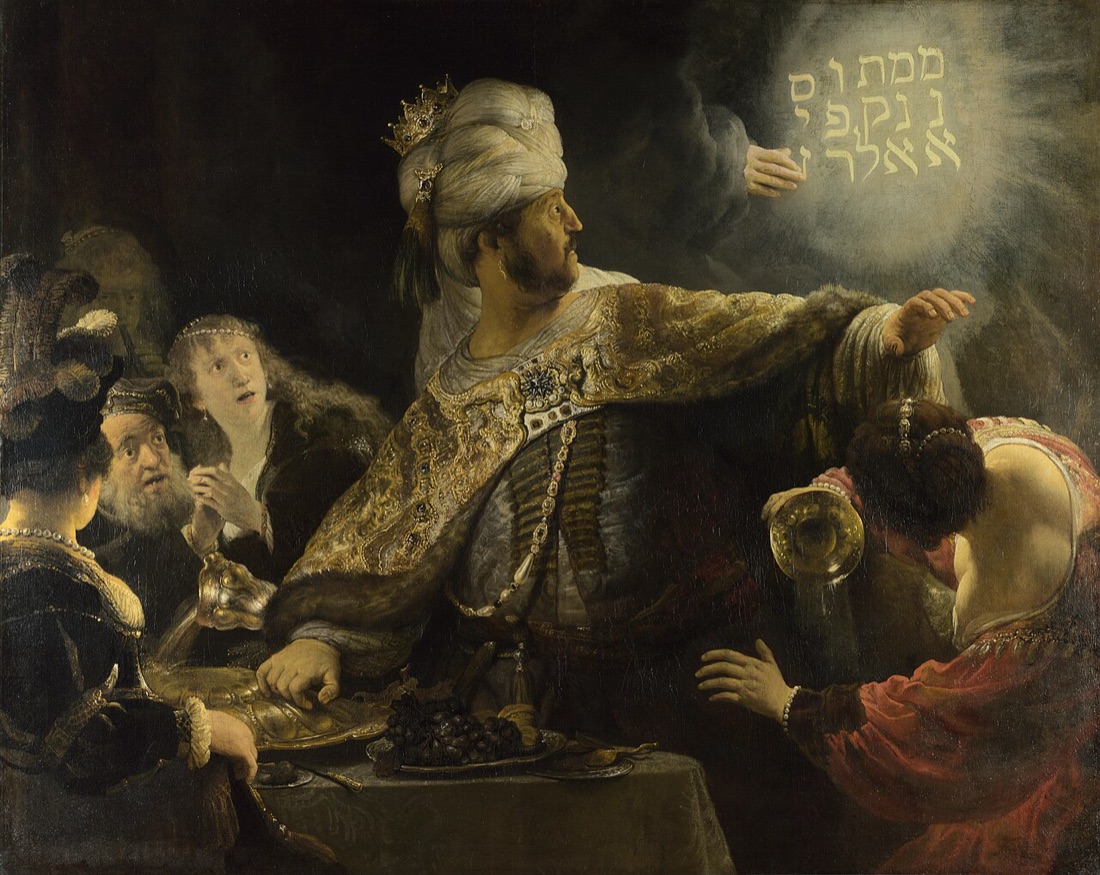
These are traditions, not records. Daniel was composed centuries after the events, and the chronicle — the contemporary document — mentions no feast at all. The phrase "the writing on the wall" entered English from that night regardless.
What does the Cyrus Cylinder actually say?
It says Cyrus was Marduk's choice, and it says so in Babylon's own language and Babylon's own theology. Found at Babylon in 1879 and now in the British Museum, the Cylinder is an Akkadian proclamation in the standard Mesopotamian royal-inscription genre — composed by or for the same priesthood that had turned on Nabonidus.
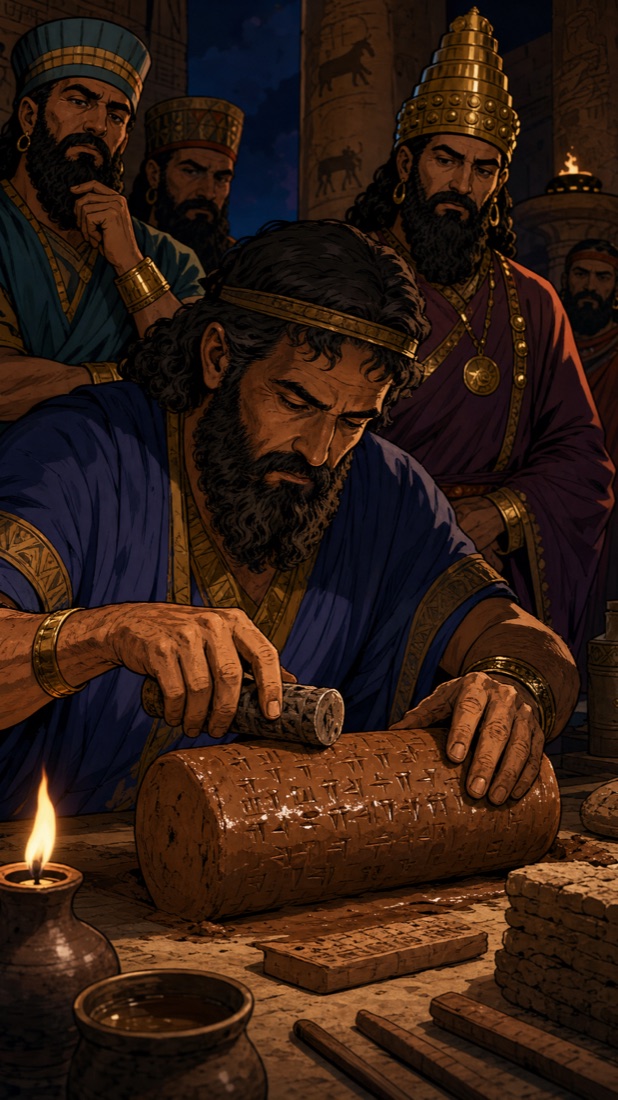
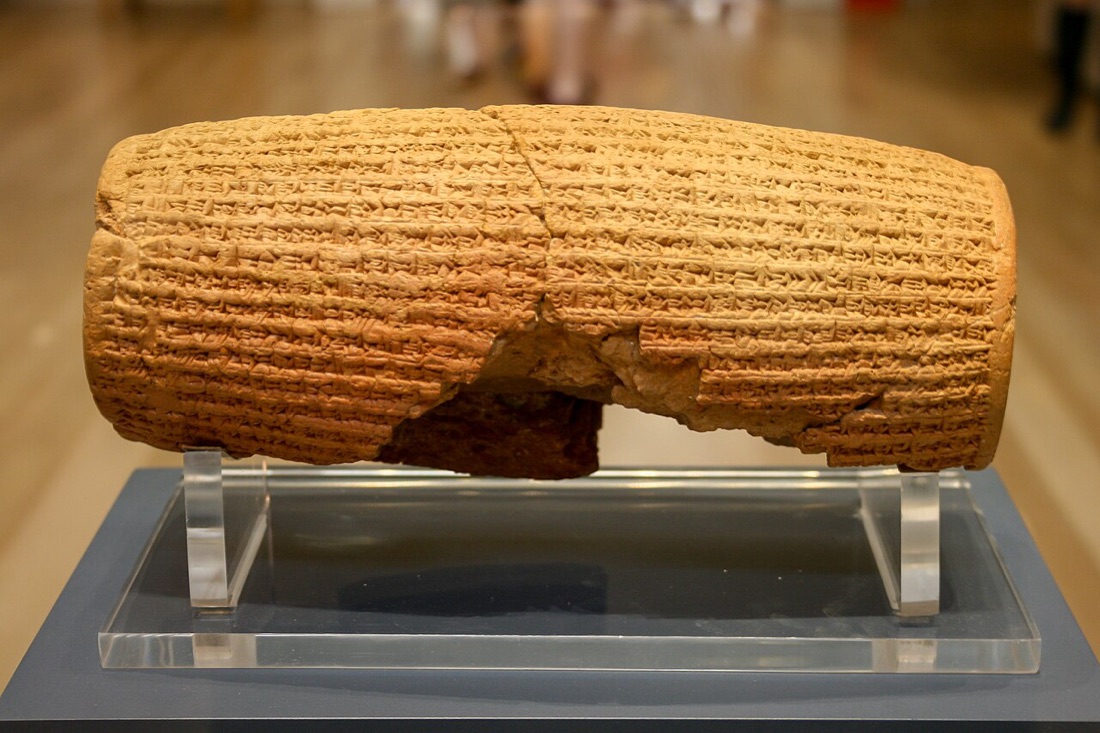
Marduk, it says, examined all the lands and "took a righteous king, his favorite, by the hand" — and made him enter Babylon "without fighting or battle." On the restorations it is equally specific: "I returned the images of the gods, who had resided there, to their places… I gathered all their inhabitants and returned to them their dwellings."
The titles Cyrus takes are Babylonian ones: "king of the world, great king, mighty king, king of Babylon, king of Sumer and Akkad, king of the four quarters." A conqueror announcing himself as the legitimate successor, in the vocabulary of the conquered.
It is worth being clear about what this document is. It is a royal proclamation, written by the winners, in a genre with fixed conventions — not a neutral report. What makes it remarkable is not that it claims mercy but that the policy it describes is independently corroborated, in another people's scripture.
Why did Cyrus send the exiles home?
Because returning displaced peoples and their gods was his stated policy, and one group's record of it survives in extraordinary detail. Jerusalem had fallen to Nebuchadnezzar in 586 BC — temple burned, elite deported to Babylon. By 538 they had been there nearly half a century.
Then, in Cyrus's first year over Babylon, the Book of Ezra records an edict: whoever is among you of all his people, let him go up to Jerusalem and build the house of the LORD. The looted temple vessels were counted back out of the Babylonian treasury — five thousand four hundred pieces of gold and silver, itemised.
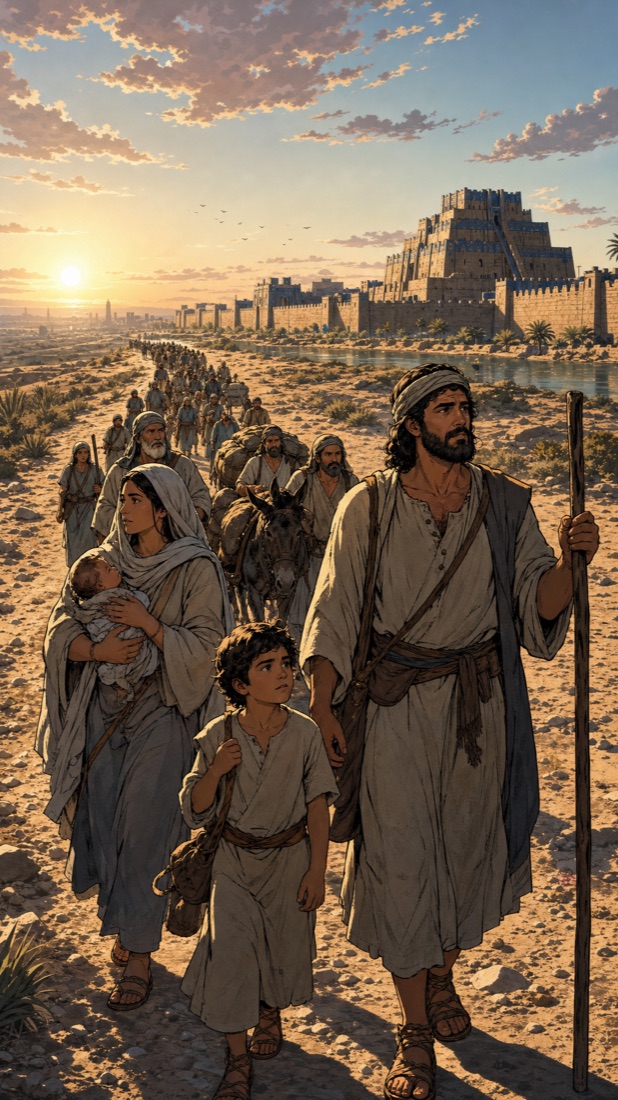
The Second Temple that those returnees began was finished in 515 BC under Darius. That is the documented consequence, and it is a large one: the edict is the hinge on which Judaism continued in the historical shape that later framed Christianity and Islam.
Why does the Hebrew Bible call Cyrus "the anointed"?
Because a prophet in Babylon was writing him into scripture before he arrived. Scholars believe the chapters known as Deutero-Isaiah were composed in Babylon during the exile, in the years Cyrus was approaching.
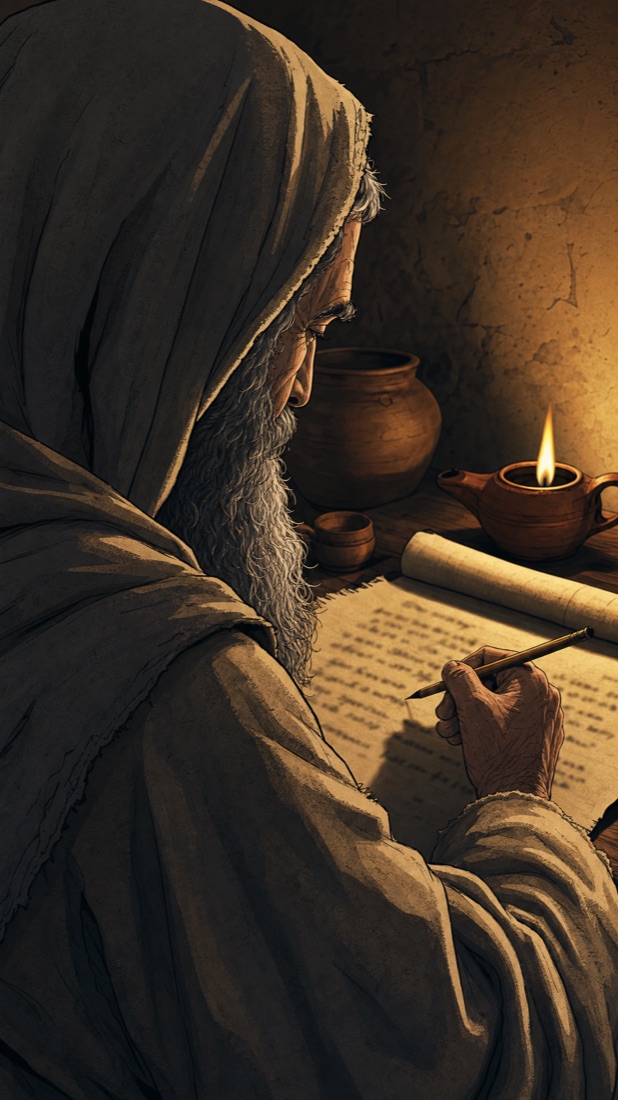
Isaiah 45:1 reads, in the King James rendering: "Thus saith the LORD to his anointed, to Cyrus." The Hebrew word is mashiach. It is applied to Israelite kings and priests throughout the Hebrew Bible. Cyrus is the only foreigner in it who is ever given the title.
Nabonidus, for his part, was spared. Berossus says Cyrus gave him a province in what is now southeastern Iran and let him live out his life there — the third defeated king in a row, after Astyages and Croesus, that Cyrus found more useful alive.
He now ruled more of the earth's people than anyone before him. The harder question was the one no conquest answers: how do you actually run it?
Sources
- The campaign, the entry "without battle," the Opis line and the disputed word at Cyrus's entry: ABC 7, the Nabonidus Chronicle (Livius); Nabonidus Chronicle. The older Grayson edition renders the entry line as green twigs spread before Cyrus; the translation linked here reads it as harû-vessels filled before him.
- All Cylinder quotations: Cyrus Cylinder, full translation (Livius); the object itself, BM 90920: Cyrus Cylinder
- Nabonidus, the Sîn devotion, the Tayma decade and the Akitu suspension: Nabonidus; Verse Account of Nabonidus (Livius); Paul-Alain Beaulieu, The Reign of Nabonidus, King of Babylon 556–539 BC (Yale, 1989)
- The festival-night tradition: Herodotus, The Histories, Book 1 (Perseus) (Babylon at 1.178–191); Belshazzar's feast
- The edict, the vessels and the return: Ezra 1; Second Temple
- Cyrus as mashiach, and the exilic dating of Isaiah 40–55: Isaiah 45 (KJV); Deutero-Isaiah
- Nabonidus spared, via Berossus: Berossus
- Campaign synthesis and the Opis debate: Matt Waters, King of the World: The Life of Cyrus the Great (Oxford, 2022); Pierre Briant, From Cyrus to Alexander (2002); Amélie Kuhrt, The Persian Empire: A Corpus of Sources (2007)
The illustrations above are reconstructions of documented events. All quotes, dates and figures are drawn from the sources listed.
Earlier chapters: Part 1 — Why Iran Blocks the Road to Cyrus the Great's Tomb · Part 2 — The Oracle Told Croesus He Would Destroy a Great Empire.